Heavy haulage keeps the UAE moving
Every new tower in Dubai, every port expansion in Abu Dhabi, and every industrial plant in Sharjah or Ras Al Khaimah depends on one thing before work can even begin: getting heavy machinery to site safely. Excavators, cranes, transformers, generators, and steel structures do not drive themselves across the Emirates. They ride on lowbed trailers.
A lowbed trailer is one of the hardest-working assets in any UAE fleet. It carries extreme loads, often in temperatures above 45°C, across highways, desert tracks, and rough construction sites. That is why the quality of its body fabrication matters so much. A well-built trailer delivers years of safe, profitable work. A poorly built one cracks, sags, and spends more time in the workshop than on the road.
This guide explains everything fleet owners, contractors, and logistics managers in the UAE should know about lowbed trailer body fabrication:
- The main types of lowbed trailers and what they are used for
- How UAE conditions shape design and material choices
- The fabrication process, from drawings to final inspection
- What professional lowbed trailer body welding services involve
- Common problems and when to book lowbed trailer body repairs
- A practical maintenance schedule
- How to choose the right lowbed trailer manufacturer for your business
Whether you run a fleet out of Jebel Ali, Mussafah, or the Sharjah Industrial Area, the information here will help you make smarter decisions about building, maintaining, and repairing your trailers.
What is a lowbed trailer?
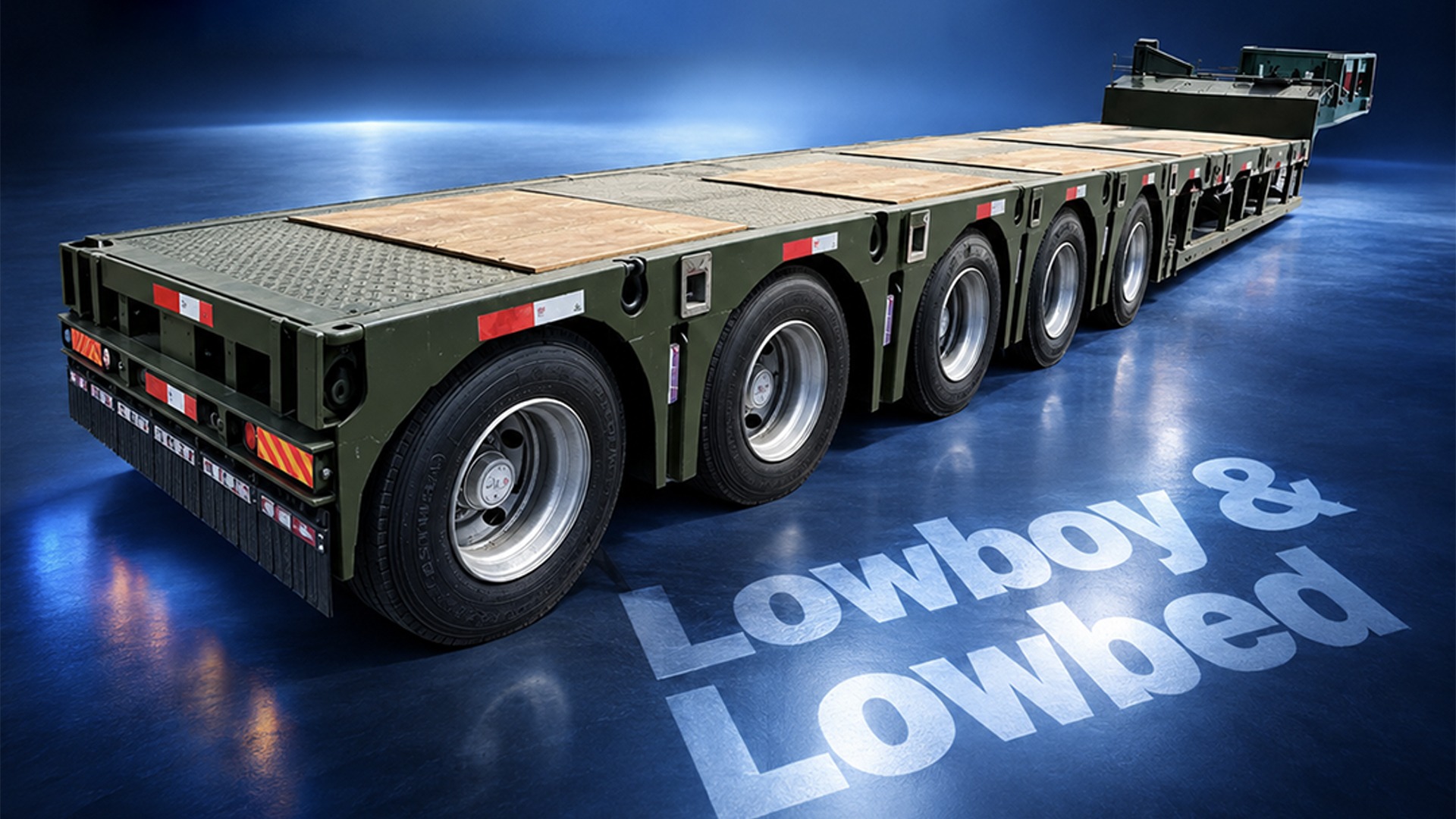
A lowbed trailer is a semi-trailer with a deck that sits much lower to the ground than a standard flatbed. The low deck lets tall, heavy equipment travel within height limits and makes loading easier, often by driving machinery straight up ramps or over a detached front.
In the UAE, lowbeds move everything from mini excavators to large crawler cranes, plant equipment for oil and gas sites, and oversized cargo leaving Jebel Ali Port or Khalifa Port.
| Type | Key Feature | Typical UAE Use |
|---|---|---|
| Fixed Gooseneck Lowbed | Gooseneck permanently attached; loading by rear ramps | Construction equipment, excavators, rollers |
| Detachable Gooseneck (RGN) | Gooseneck detaches so the front lowers to the ground | Tall or very heavy machinery that cannot climb ramps |
| Hydraulic Gooseneck | Hydraulic cylinders raise and lower the front | Frequent loading of tracked plant and cranes |
| Step-Deck (Semi-Lowbed) | Upper and lower deck levels | Mixed cargo, steel structures, lighter machinery |
| Extendable Lowbed | Telescopic deck lengthens on demand | Long items such as beams, pipes, wind or tank sections |
| Multi-Axle Heavy-Duty Lowbed | Four or more axles to spread load | Transformers, generators, and very heavy project cargo |
Trailers are usually specified by payload, from around 30 tonnes for lighter units to well over 100 tonnes for multi-axle heavy-haul designs. Axle count, deck length, deck width, and loading method should all follow the cargo you actually carry, not a generic catalogue.
Built for UAE conditions
A trailer designed for a mild European climate will not last long on UAE roads. Local fabrication should account for four conditions that punish steel, welds, and components every day.
Extreme heat. Summer surface temperatures on steel decks can climb far above the air temperature. Heat expands steel, softens poor-quality paint, and ages rubber seals, hoses, and tyres faster. Good fabrication allows for thermal movement and uses coatings and components rated for high temperatures.
Sand and dust. Fine desert sand works its way into suspension joints, kingpins, landing gear, and brake components. It acts like grinding paste on moving parts. Sealed bearings, protective covers, and designs that do not trap sand all extend service life.
Humidity and salt. Coastal areas around Dubai, Abu Dhabi, Fujairah, and the ports combine high humidity with salty air. This speeds up corrosion, especially at welds, joints, and anywhere water can collect. Shot blasting, quality primers, and drainage holes in the right places are essential.
Heavy and uneven loads. Construction sites, quarries, and desert access roads are rough. Trailers face twisting forces, point loads from tracked machines, and repeated shocks. Main beams, cross members, and the gooseneck must be designed with generous safety margins, not built to the bare minimum.
Operators should also plan for the UAE’s regulatory side. Registration, technical inspection, and permits for oversized or overweight loads are handled through the relevant traffic and road authorities in each emirate. A capable fabricator builds to dimensions and specifications that make these approvals straightforward.
The lowbed trailer body fabrication process
Professional lowbed trailer body fabrication follows a disciplined sequence. Each stage builds on the last, and shortcuts at any point show up later as cracks, misalignment, or premature wear.
- Requirement analysis. The fabricator studies what you carry, how often, where, and how it is loaded. Payload, deck dimensions, axle configuration, and loading method are agreed before any design begins.
- Engineering and design. Engineers produce detailed drawings, often supported by structural analysis software, to check stresses on the main beams, gooseneck, and cross members under full and uneven loads.
- Material selection and cutting. High-strength steel plates and sections are cut to size using CNC plasma or laser cutting for accuracy and clean edges.
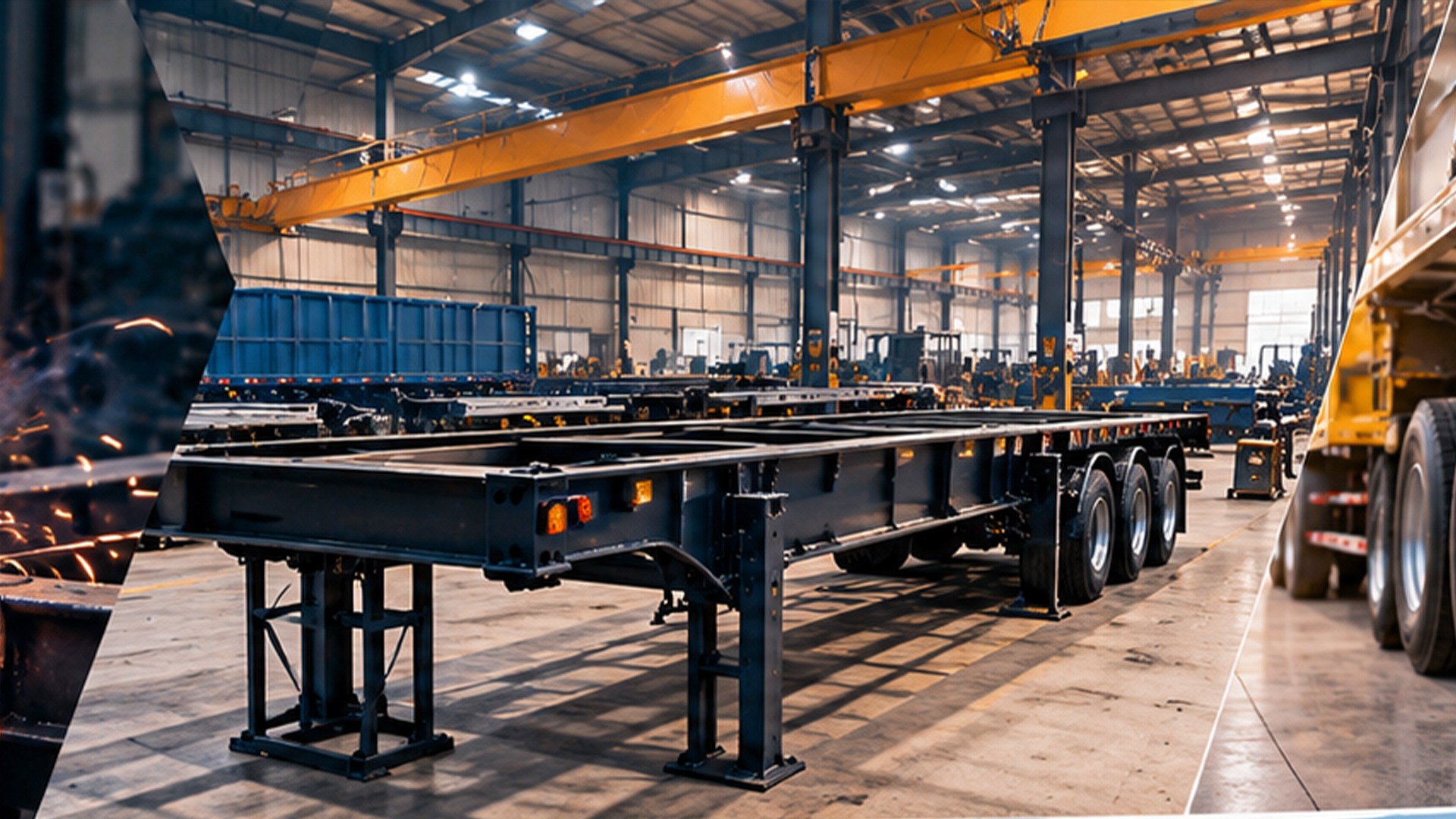
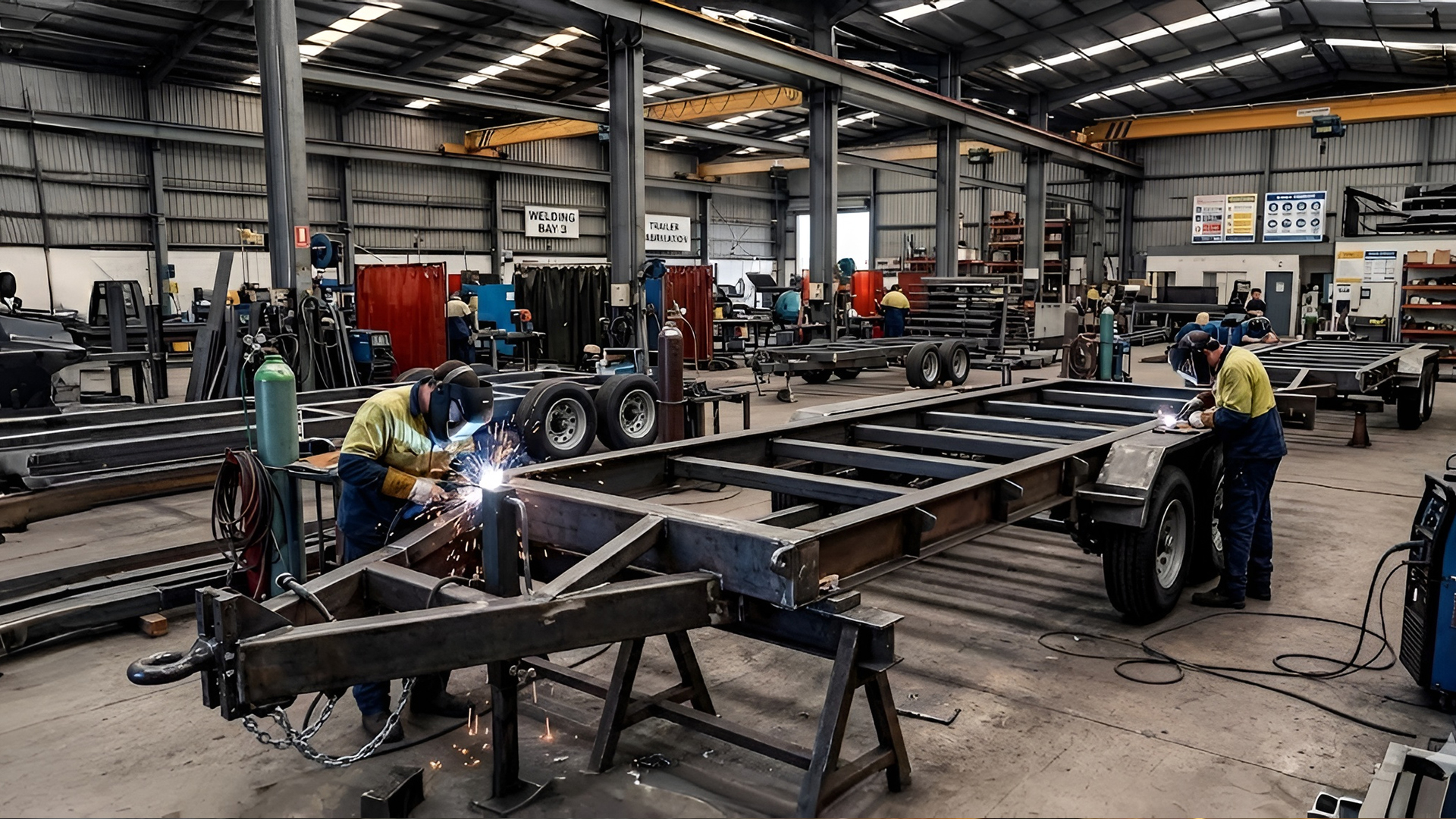
- Beam fabrication. The main I-beams are built up from plate, with web and flanges joined by automated or carefully controlled welding. Beams are often given a slight upward camber so they sit level under load.
- Frame assembly. Main beams, cross members, outriggers, and the gooseneck are assembled on a jig to keep the frame square and true.
- Welding. Structural welds are completed in a controlled sequence to limit distortion, followed by inspection of critical joints.
- Surface preparation. The finished frame is shot blasted to remove mill scale, rust, and contamination, creating a clean surface for coating.
- Painting and coating. Anti-corrosion primer, intermediate coats, and a durable topcoat protect the steel against heat, UV, and salt.
- Component installation. Axles, suspension, brakes, landing legs, kingpin, ramps, lighting, wiring, and decking are fitted.
- Testing and inspection. Brakes, lights, suspension, alignment, and hydraulic systems are tested, and the trailer is checked against drawings before handover.
Ask any fabricator to walk you through these stages. A confident answer with clear quality checks at each step is a strong sign of reliable work.
Materials and components that make the difference
Two trailers can look identical in the yard and perform very differently on the road. The difference lies in the materials and components chosen during fabrication.
Steel. Main beams and critical members are typically made from high-tensile structural steel, which offers more strength per kilogram than mild steel. That means a lighter trailer for the same payload, or more payload for the same weight. Higher-grade quenched and tempered steels are sometimes used in the most heavily loaded areas. Whatever the grade, insist on mill certificates that confirm the steel’s specification.
Decking. Options include steel chequer plate, which is tough and simple to maintain, and hardwood decking, which gives tracked machinery better grip and protects the deck surface. Many UAE operators use a combination.
Axles and suspension. Reputable axle brands with good local parts support are worth the extra cost. Mechanical spring suspension is robust and simple; air suspension offers a smoother ride and adjustable height; hydraulic suspension suits very heavy, multi-axle work.
Brakes and safety systems. Air brakes with properly sized chambers, plus ABS where specified, are essential for stopping heavy loads safely on UAE highways.
Gooseneck and kingpin. These carry huge forces from the tractor unit. They need extra reinforcement and the highest weld quality on the whole trailer.
Ramps and loading aids. Hydraulic or spring-assisted ramps reduce manual handling and speed up loading on busy sites.
Lighting and electrics. Sealed LED lights and protected wiring resist heat, dust, and vibration far better than older bulbs and exposed cables.
Tie-down points. Plenty of rated lashing points, built into the frame, help crews secure cargo correctly every time.
Lowbed trailer body welding services
Welding is the backbone of any lowbed trailer. Every beam, cross member, and gooseneck joint relies on welds that must hold under heavy loads, constant vibration, and big temperature swings. That is why specialist lowbed trailer body welding services are so important, both for new builds and for repairs.
Common welding methods used:
- MIG/MAG welding. Fast and versatile, widely used for frame assembly and general structural work.
- Flux-cored arc welding. Good penetration and productivity, useful for thicker sections and outdoor or site work.
- Submerged arc welding (SAW). Often used for long, continuous welds on main beams, producing consistent, deep-penetration joints.
- Stick (SMAW) welding. Practical for field repairs and hard-to-reach areas.
What separates quality welding from the rest:
- Qualified welders. Welders tested and certified to recognised standards, such as AWS or ISO-based qualifications, for the processes and positions they use.
- Written procedures. Welding procedure specifications that set out preheat, consumables, current, and sequence for each critical joint.
- Correct preparation. Properly bevelled edges, clean surfaces, and accurate fit-up before the arc is struck.
- Distortion control. Planned weld sequences and jigs that keep beams straight and frames square.
- Inspection and testing. Visual inspection on all welds, plus non-destructive testing such as dye penetrant, magnetic particle, or ultrasonic testing on critical joints.
In the UAE heat, welding also needs good working practices: controlling heat input, protecting the weld area from wind-blown sand, and keeping consumables dry. Poor welds may look fine at handover, but they become the starting point for fatigue cracks after months of heavy use. Paying for quality welding up front is far cheaper than repairing a failed beam later.
Lowbed trailer body repairs: common problems and warning signs
Even the best-built trailer needs repairs over a long working life. Catching problems early keeps repair costs low and prevents roadside failures, which can be dangerous with heavy cargo on board.
Common problems seen in UAE fleets:
- Cracked welds and beams. Fatigue cracks often start near the gooseneck, at cross-member joints, or where the deck steps down.
- Sagging or twisted frames. Usually caused by overloading, point loads, or uneven loading on rough ground.
- Corrosion. Especially along welds, under decking, and in areas where water and salt collect.
- Damaged decking. Worn or broken timber, or dented and torn steel plate from tracked machinery.
- Ramp and hydraulic faults. Bent ramps, leaking cylinders, and worn hinges.
- Suspension and axle wear. Broken springs, worn bushes, failed air bags, and misaligned axles.
- Brake and electrical faults. Worn linings, leaking air lines, and damaged wiring or lights.
Warning signs to act on immediately:
- Visible cracks in paint around welds or beams, often with rust streaks
- Uneven tyre wear or the trailer pulling to one side
- The deck sitting lower or unevenly when empty
- Unusual noises over bumps
- Air leaks or slow brake response
Professional lowbed trailer body repairs should start with a full inspection, not just a patch over the visible damage. Good repair work includes finding the root cause, cutting out damaged steel, welding in proper reinforcement, re-checking alignment, and restoring the corrosion protection. Many UAE workshops also offer mobile repair teams for urgent breakdowns at project sites, which reduces downtime when a trailer cannot be moved.
A practical maintenance schedule
Regular maintenance is the cheapest way to extend a lowbed trailer’s life and avoid emergency repairs. The schedule below is a starting point; adjust it to your loads, routes, and the manufacturer’s recommendations.
| Frequency | Checks |
|---|---|
| Before Every Trip | Tyres and pressures, lights, brake air lines, kingpin lock, ramps secured, tie-down points |
| Weekly | Wash off sand and dust; check for loose bolts, visible cracks, and damaged decking |
| Monthly | Grease kingpin, landing gear, ramp hinges, and suspension points; inspect hydraulic hoses and cylinders |
| Every 3 Months | Brake inspection and adjustment; suspension bushes and springs; axle alignment check |
| Every 6 Months | Detailed inspection of welds and main beams, especially around the gooseneck; touch up damaged paint |
| Yearly | Full structural inspection, wheel bearing service, and corrosion treatment before the next summer |
In the UAE, two habits pay off more than any other. First, wash trailers regularly, particularly after desert work or time near the coast, to remove sand and salt. Second, repair chipped paint quickly. A small scratch left open in humid coastal air can turn into serious corrosion within months.
How to choose a lowbed trailer manufacturer in the UAE
The right lowbed trailer manufacturer is a long-term partner, not just a supplier. You will rely on them for design, fabrication, spare parts, and repairs for years. Weigh these points before you sign:
Local experience. A manufacturer with workshops in the UAE understands local loads, climate, and approval requirements, and can support you quickly when something goes wrong.
In-house engineering. Ask whether they design trailers themselves or simply copy existing models. Custom engineering ensures the trailer suits your exact cargo.
Fabrication facilities. Look for CNC cutting, beam welding lines, assembly jigs, shot blasting, and a proper paint booth. Visit the workshop if you can.
Welding quality. Ask about welder certifications, welding procedures, and non-destructive testing on critical joints.
Quality components. Check which brands of axles, suspension, brakes, and hydraulics they use, and whether spare parts are readily available in the UAE.
Repair and after-sales service. A manufacturer that also provides welding and body repairs can maintain your fleet throughout its life, ideally with mobile support for site breakdowns.
Track record. Ask for references from contractors, logistics firms, or plant-hire companies in Dubai, Abu Dhabi, and the Northern Emirates.
Warranty and documentation. Expect clear warranty terms, drawings, material certificates, and a maintenance manual.
Delivery time. Realistic timelines matter when your trailer is needed for a project start date.
Price matters, but the cheapest quote can become the most expensive trailer once downtime, repairs, and early replacement are counted. Compare offers on total cost of ownership, not just the purchase price.
Conclusion
A lowbed trailer is only as strong as its fabrication. In the UAE, where trailers face intense heat, abrasive sand, coastal humidity, and some of the heaviest loads in the region, careful engineering, quality steel, expert welding, and dependable components are not optional. Regular maintenance and prompt, professional repairs then keep that investment working safely for years.
Atef Trailer Manufacturer brings these strengths together for fleet owners, contractors, and logistics companies across the UAE. As an experienced lowbed trailer manufacturer, Atef Trailer Manufacturer provides custom lowbed trailer body fabrication built for local conditions, along with professional lowbed trailer body welding services and reliable lowbed trailer body repairs to keep your fleet on the road.
Whether you need a new heavy-duty lowbed, an upgrade to an existing trailer, or fast repair support, contact Atef Trailer Manufacturer to discuss your requirements and get a trailer built for the way you work.