Every day, thousands of trucks move across the United Arab Emirates carrying containers from the ports, steel to construction sites, fuel to industrial zones and food to supermarket shelves. Behind almost every one of these journeys is a semi trailer — the workhorse of modern road freight. As the UAE continues to grow as a global trade and logistics hub, the demand for strong, reliable and purpose-built semi trailers has never been higher.
For transport companies, contractors, fleet owners and logistics operators, choosing the right semi trailer manufacturer in the UAE is a decision that affects safety, efficiency, operating costs and long-term profitability. This guide explains everything you need to know: the types of semi trailers available, how demand differs across Dubai, Sharjah, Abu Dhabi, Fujairah and Ras Al Khaimah, the advantages of buying locally manufactured trailers, and how to select the right manufacturer for your business.
The UAE: a logistics powerhouse
The UAE sits at the crossroads of Asia, Europe and Africa, making it one of the most important trade gateways in the world.
Its world-class infrastructure supports an enormous volume of goods moving by sea, air and road.
Major ports such as Jebel Ali in Dubai, Khalifa Port in Abu Dhabi, Port Khalid in Sharjah, the Port of Fujairah and Saqr Port in Ras Al Khaimah handle vast quantities of cargo. Once ships unload, much of that cargo travels onward by road — to warehouses, free zones, factories, construction projects and neighbouring GCC countries such as Saudi Arabia and Oman.
At the same time, the UAE’s ongoing investments in construction, energy, manufacturing, mining, e-commerce and infrastructure continue to increase the need for heavy-duty road transport. National rail projects are adding new capacity for long-haul freight, but trucks and trailers remain essential for first-mile and last-mile delivery, and for the many routes that rail does not reach.
All of this makes the semi trailer one of the most valuable assets in the UAE’s transport sector.
What is a semi trailer?
A semi trailer is a trailer without a front axle. Instead of standing on its own wheels at the front, it rests on a tractor unit (often called a prime mover or truck head) through a coupling device known as a fifth wheel. The tractor carries a significant part of the trailer’s weight, while the trailer’s rear axles support the rest.
This design offers several advantages:
- Higher load capacity compared with rigid trucks
- Flexibility, because one tractor unit can pull different trailers for different jobs
- Efficiency, as trailers can be dropped and swapped, keeping tractors moving
- Versatility, with trailer bodies designed for containers, bulk goods, liquids, machinery and more
A typical semi trailer includes a chassis, kingpin, landing gear, axles and suspension, braking system, tyres, lighting and electrical systems, and a body or deck designed for the cargo it will carry.
Types of semi trailers manufactured in the UAE
UAE semi trailer manufacturers produce a wide range of designs to serve different industries. Here are the most common types and what they are used for.
Flatbed trailers
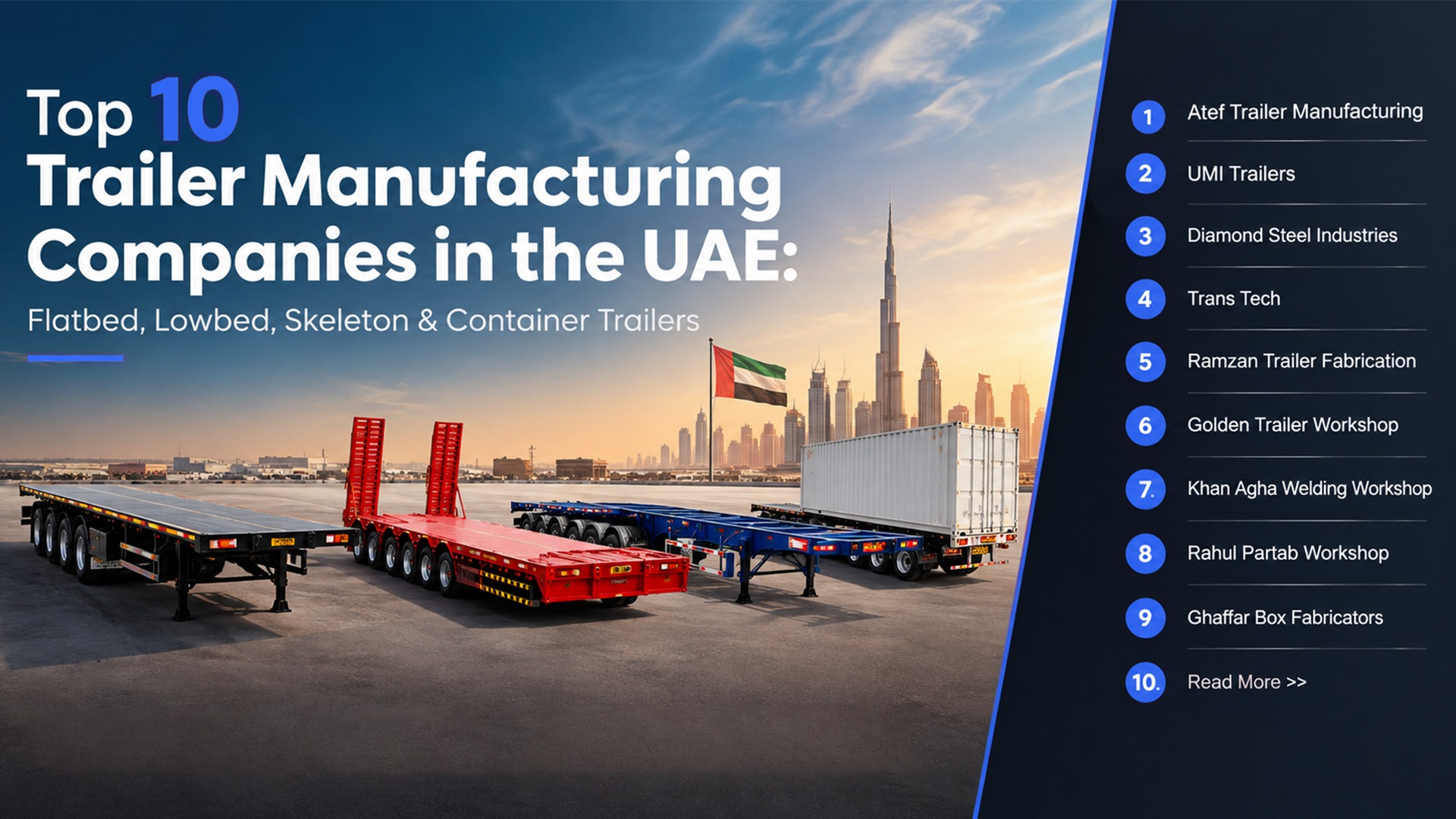
Flatbed trailers have an open, level deck with no sides or roof. They are ideal for steel bars, pipes, building materials, timber, machinery and oversized items that need to be loaded from the side or top by crane or forklift. Their simplicity, durability and flexibility make them one of the most popular trailer types in the UAE.
Container (skeletal) trailers
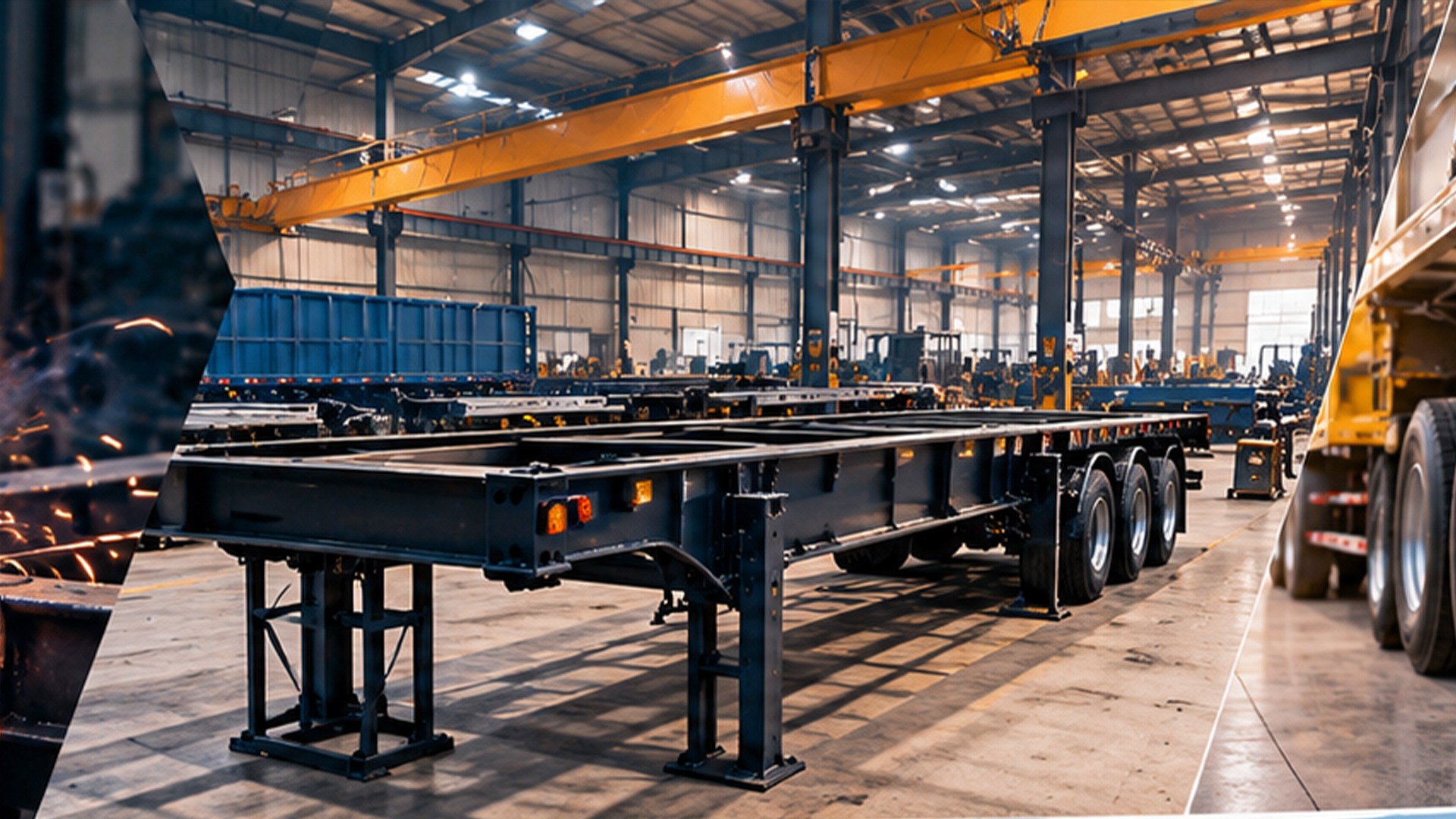
Skeletal trailers are lightweight frames designed specifically to carry shipping containers, usually 20-foot and 40-foot units. With twist locks positioned to secure containers safely, they are a key part of port logistics around Jebel Ali, Khalifa Port, Port Khalid, Fujairah and Saqr Port.
Low bed (lowboy) trailers
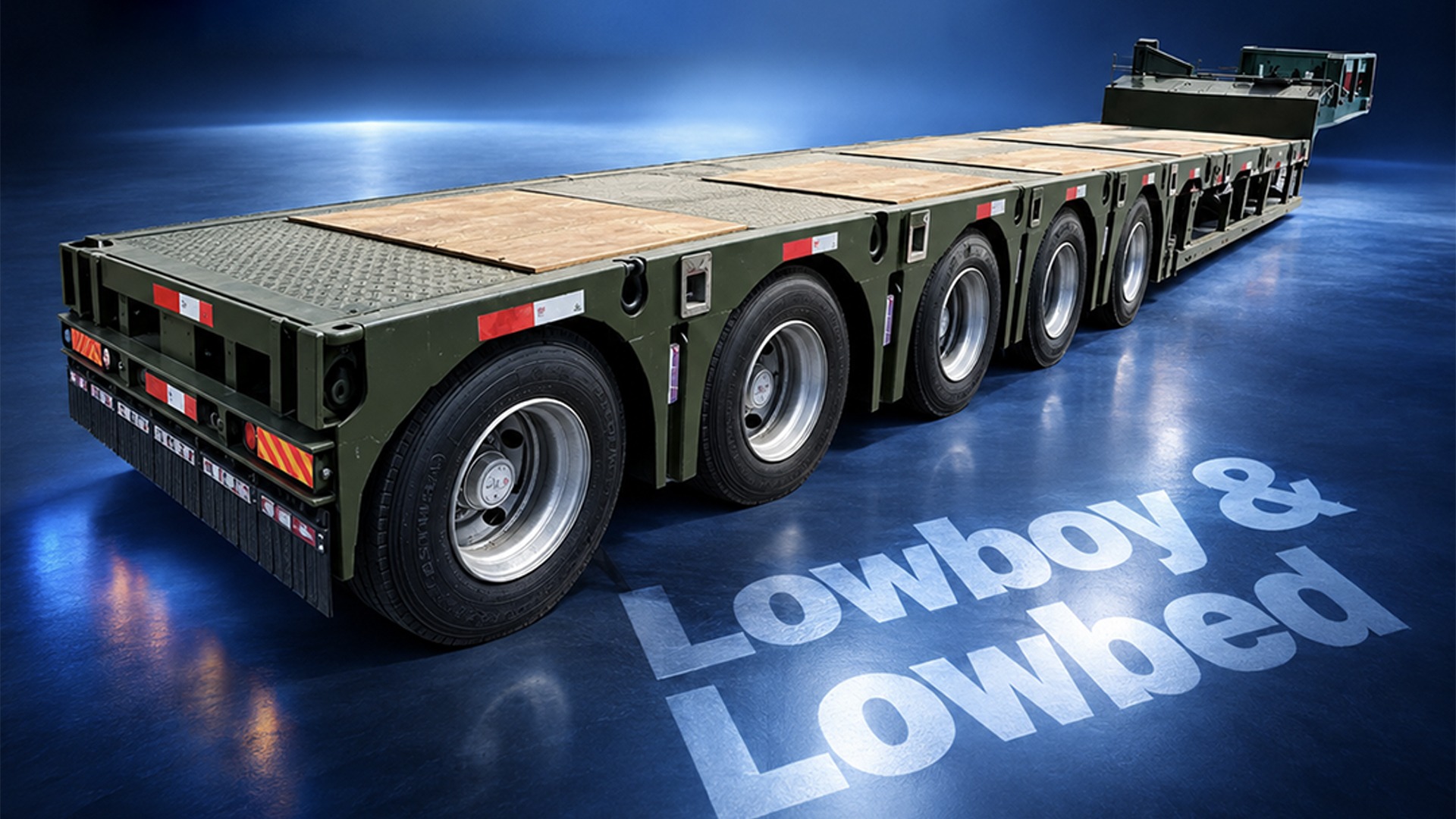
Low bed trailers have a deck positioned very close to the ground, giving extra height clearance for tall and heavy equipment. They are used to move excavators, bulldozers, cranes, generators, transformers and other heavy machinery for construction, oil and gas, and infrastructure projects.
Tipper (dump) trailers
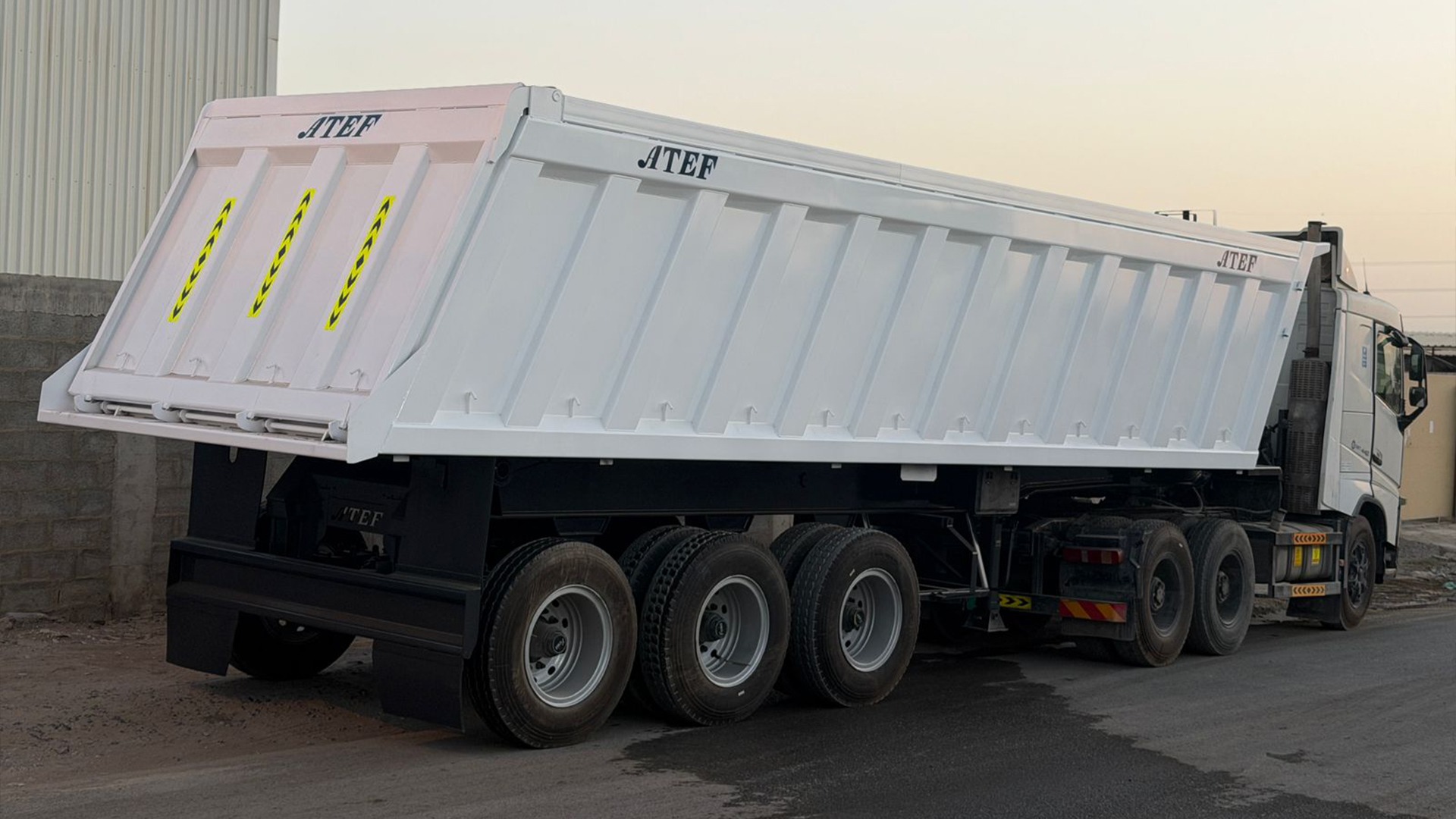
Tipper trailers use hydraulic systems to raise the body and unload materials quickly. They are widely used for sand, gravel, aggregates, crushed rock and demolition waste, and are especially important for quarries and construction projects in Fujairah and Ras Al Khaimah.
Tanker trailers
Tanker trailers are designed to transport liquids and gases such as fuel, water, chemicals, bitumen and edible oils. Depending on the cargo, they may be made from aluminium, carbon steel or stainless steel, and may include compartments, insulation, heating systems and specialised valves. Safety and compliance are critical for these trailers, particularly when carrying hazardous materials.
Bulk cement and powder tankers
These pressurised trailers carry dry bulk materials such as cement, fly ash, lime and other powders. They unload using air pressure, making them essential for cement plants, ready-mix concrete suppliers and large construction sites.
Curtain side trailers
Curtain side trailers have flexible side curtains that slide open for fast side loading while protecting cargo from dust, sun and rain. They are popular for palletised goods, consumer products and distribution operations.
Box (dry van) trailers
Box trailers have fully enclosed bodies that protect goods from weather, dust and theft. They are commonly used for retail, e-commerce, electronics, furniture and general cargo.
Refrigerated (reefer) trailers
Refrigerated trailers include insulated bodies and cooling units to keep products at controlled temperatures. In the UAE’s intense summer heat, they are vital for food, dairy, seafood, meat, pharmaceuticals and flowers.
Side wall (drop side) trailers
Side wall trailers have fixed or drop-down sides that hold loose or bagged goods securely. They are often used for cement bags, construction materials, scrap metal and general cargo.
Car carrier trailers
Car carriers are designed to move multiple vehicles at once, serving dealerships, auto auctions, rental companies and vehicle importers.
Custom and special-purpose trailers
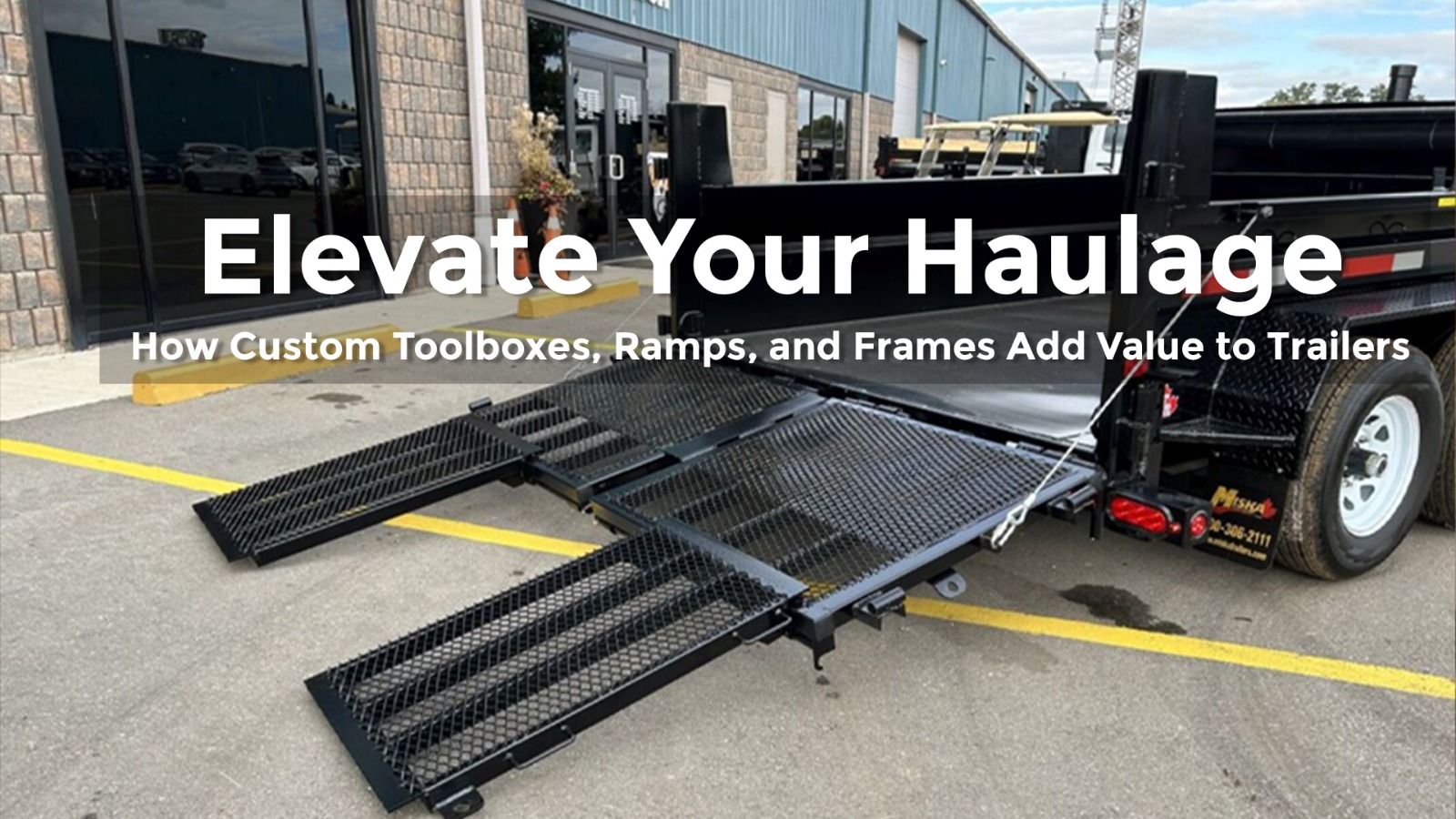
Many projects need trailers built for a specific job, such as extendable trailers for wind turbine blades or long structures, modular trailers for extremely heavy loads, livestock trailers, or trailers fitted with special equipment. Experienced UAE manufacturers can design and build these to order.
Semi trailer demand across the UAE
Each emirate has its own economic strengths, which shape the type of trailers businesses need most.
Dubai
Dubai is the UAE’s commercial and logistics capital. Jebel Ali Port, one of the busiest container ports in the world, and the surrounding Jebel Ali Free Zone generate constant demand for container skeletal trailers and flatbeds. Dubai’s major construction and real estate developments rely on low bed, tipper and side wall trailers, while its thriving retail, hospitality and e-commerce sectors need curtain side, box and refrigerated trailers. Logistics hubs in areas such as Al Quoz, Ras Al Khor, Dubai Investments Park and Dubai South keep fleets busy around the clock.
Sharjah
Sharjah is home to a large concentration of factories, warehouses and workshops, particularly across its industrial areas and free zones. Port Khalid and the Hamriyah Free Zone support trade in building materials, steel, chemicals and consumer goods. As a result, flatbed, side wall, tanker and box trailers are in high demand. Sharjah’s strategic position between Dubai and the Northern Emirates also makes it an important base for transport companies serving multiple markets.
Abu Dhabi
As the UAE’s capital and its largest emirate by area, Abu Dhabi has a strong focus on energy, oil and gas, industry and large-scale infrastructure. Projects in areas such as Mussafah, ICAD and the Khalifa Economic Zones (KEZAD) require heavy-duty low bed trailers, tankers and specialised trailers for oversized equipment. Khalifa Port drives demand for container trailers, while long routes to the western region and remote energy sites call for durable trailers designed for long distances and harsh desert conditions.
Fujairah
Fujairah, on the UAE’s east coast, is a major global hub for oil storage and bunkering, as well as a centre for quarrying and aggregate production. Its location on the Gulf of Oman gives it a strategic role in shipping. Tanker trailers for petroleum products and tipper trailers for rock, gravel and aggregates are especially important here. The mountainous terrain also means trailers must be built with strong chassis, reliable braking systems and suspension that can handle steep gradients.
Ras Al Khaimah
Ras Al Khaimah has a strong industrial base built on quarrying, cement, ceramics and manufacturing. Saqr Port supports bulk cargo exports, particularly aggregates and construction materials. Tipper trailers, bulk cement tankers, flatbeds and side wall trailers are widely used to move raw materials from quarries and factories to ports and construction sites across the UAE and the wider region.
Connecting the emirates and the GCC
Many fleets operate across several emirates in a single day and regularly cross into Saudi Arabia and Oman. This means trailers must be versatile, reliable over long distances and compliant with both UAE and GCC requirements.
Why choose a local semi trailer manufacturer in the UAE?
Imported trailers may look attractive on paper, but locally manufactured trailers offer clear practical advantages.
Designed for local conditions
UAE manufacturers understand the region’s extreme heat, humidity, sand, dust and coastal salt air. They design trailers with suitable materials, coatings, tyres, seals and cooling-friendly components to perform reliably in these conditions.
Customisation
Local manufacturers can tailor trailers to your exact needs: deck length, number of axles, payload capacity, suspension type, body style, colour, branding and accessories. Instead of adapting your operations to a standard imported product, you get a trailer built around your business.
Faster delivery
Buying locally avoids long shipping times, customs delays and the uncertainty of international supply chains. Fleet owners can receive trailers faster and respond quickly to new contracts.
Easier compliance
Experienced UAE manufacturers are familiar with local vehicle standards, registration procedures and dimension and weight limits. This helps ensure trailers are approved and registered without costly modifications.
After-sales service and spare parts
When something goes wrong, downtime costs money. Local manufacturers can provide quicker repairs, maintenance, spare parts and technical support, keeping your fleet on the road.
Supporting the national economy
Choosing UAE-made trailers supports local industry, jobs and the country’s broader goals of growing its manufacturing sector.
Features that matter in UAE semi trailers
A quality semi trailer for UAE roads should include:
- High-strength steel chassis, to handle heavy loads while controlling weight
- Anti-corrosion protection, such as shot blasting, epoxy primers and quality paint or galvanising, to resist humidity and salt air near the coast
- Reliable axles and suspension, whether mechanical leaf spring or air suspension, matched to the load and route
- Efficient braking systems, including ABS where required, for safety on highways and mountain roads
- Heat-resistant tyres, rated for high temperatures and heavy loads
- Durable landing gear and kingpin, for safe coupling and parking
- LED lighting and reflective markings, for visibility at night and in dust storms
- Secure load restraint points, twist locks and lashing rings to keep cargo stable
- Lightweight design options, such as aluminium bodies, to increase payload and reduce fuel consumption
- Tracking and telematics readiness, for fleet monitoring and security
How to choose the right semi trailer manufacturer in the UAE
With many manufacturers in the market, it pays to evaluate options carefully. Consider these factors:
- Experience and reputation. Look for a manufacturer with a proven track record, satisfied clients and trailers already operating successfully on UAE roads.
- Product range. A manufacturer that builds many trailer types can support your fleet as your business grows and diversifies.
- Engineering capability. Ask about design processes, load calculations and quality control. Strong engineering means safer, longer-lasting trailers.
- Quality of components. Check the brands and specifications of axles, suspension, brakes, landing gear and tyres. Reliable components reduce breakdowns.
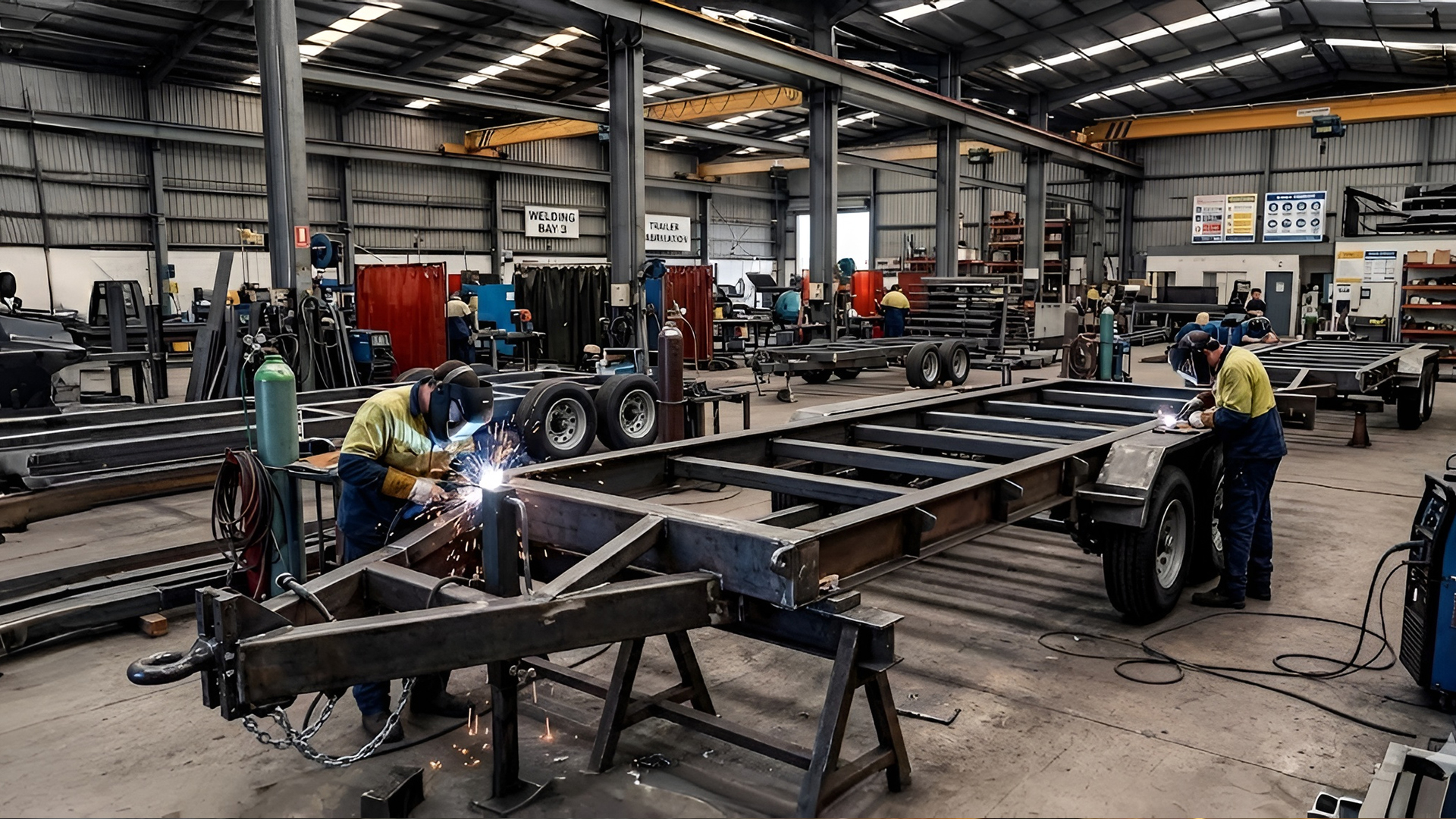
- Manufacturing facilities. Modern welding, cutting, blasting and painting facilities usually result in better build quality and consistency.
- Customisation options. Make sure the manufacturer can adapt designs to your cargo, routes and operational needs.
- Compliance support. The manufacturer should help with documentation, testing and registration so your trailers meet UAE requirements.
- Warranty and after-sales service. Clear warranty terms, spare parts availability and responsive service are essential.
- Delivery timelines. Confirm realistic production and delivery schedules before ordering.
- Total cost of ownership. The cheapest trailer is not always the best value. Consider durability, maintenance costs, fuel efficiency and resale value.
Regulations and compliance in the UAE
Semi trailers in the UAE must meet federal and emirate-level requirements before they can operate on public roads. While specific rules can change, operators should generally ensure that:
- Trailers conform to applicable UAE and GCC vehicle standards
- Trailers are inspected, registered and insured with the relevant traffic authority
- Gross vehicle weight, axle loads and dimensions stay within permitted limits
- Oversized or overweight loads have the required special permits and escorts
- Lighting, reflectors, brakes and safety equipment meet regulatory standards
- Tankers carrying dangerous goods comply with hazardous materials regulations
Because requirements may vary between emirates and are updated from time to time, it is wise to confirm current rules with the relevant authorities and work with a manufacturer experienced in UAE compliance.
Maintenance tips to extend trailer life
Even the best-built trailer needs regular care, especially in the UAE’s demanding climate:
- Inspect tyres daily for pressure, wear and heat damage; underinflated tyres are a major cause of blowouts in summer.
- Check brakes regularly and replace worn pads, drums and air lines promptly.
- Lubricate moving parts such as the kingpin, fifth wheel contact area, landing gear and suspension.
- Wash trailers frequently to remove sand, dust and salt that cause corrosion.
- Touch up paint damage quickly to stop rust spreading.
- Inspect welds and the chassis for cracks, particularly after heavy or rough-terrain use.
- Test lights and electrical connections to stay visible and compliant.
- Follow a scheduled service plan recommended by your manufacturer.
Frequently asked questions
What is the most popular semi trailer type in the UAE?
Flatbed and container skeletal trailers are among the most widely used because of the UAE’s busy ports and construction sector, followed closely by tipper, low bed and tanker trailers.
How long does it take to manufacture a semi trailer?
Standard trailers can often be delivered within a few weeks, while custom or specialised designs may take longer depending on complexity and component availability.
Can a semi trailer be customised for my business?
Yes. Local manufacturers can adjust length, axles, payload, body type, suspension, accessories and branding to suit your cargo and routes.
How long does a semi trailer last?
With good build quality and regular maintenance, a semi trailer can serve reliably for many years. Climate protection and routine servicing make a major difference in the UAE.
Can UAE-made trailers operate in other GCC countries?
Many UAE-built trailers operate across the GCC. Confirm that your trailer meets the standards and permit requirements of each country on your routes.
Conclusion
Semi trailers are the backbone of the UAE’s logistics, construction, energy and trade sectors. From the container terminals of Dubai and Abu Dhabi to the industrial zones of Sharjah, the oil terminals of Fujairah and the quarries of Ras Al Khaimah, the right trailer keeps goods moving safely, efficiently and profitably. Choosing a trusted local manufacturer means getting trailers designed for UAE conditions, built to your requirements and supported long after delivery.
If you are looking for a dependable partner, Atef Trailer Manufacturing designs and builds high-quality semi trailers for businesses across Dubai, Sharjah, Abu Dhabi, Fujairah and Ras Al Khaimah. From flatbeds and container trailers to low beds, tippers, tankers and fully customised solutions, Atef Trailer Manufacturing combines strong engineering, durable materials and responsive after-sales support to keep your fleet moving. Contact Atef Trailer Manufacturing today to discuss the right trailer for your business.